

Dear Aunt Sally is made and published by Neil Rohan. AppBrain is an independent app data site and isn't affiliated with Neil Rohan. The app name, icon, screenshots and description belong to Neil Rohan and are shown as published on the App Store.
AppBrain's verdict
Established- Rating on App Store
- 4.67
- 3 ratings
- Last updated
- August 2, 2026
It doesn't have enough ratings yet to judge what users think.
Rankings
App Store top chartsApp Store Rankings for Dear Aunt Sally
Competitors
Similar apps and more from Neil Rohan









Releases
Updates seen on the App Store- Version
- 5.1.0
- Launched
- July 2021
No changelog data
User feedback
Ratings and reviews on the App StoreComments on Dear Aunt Sally for iOS
We don't have enough comments to show example comments. Please check back later.
Technology
Found in the app by AppBrain- Price
- Free
- App size
- 17.1 MB
- Content rating
- Everyone
Technologies used by Dear Aunt Sally
About the app and developer
About Dear Aunt Sally
Dear Aunt Sally is an education app developed by Neil Rohan.
User Ratings
Dear Aunt Sally is rated 4.67 out of 5 stars. The rating is based on 3 ratings.
App Information
Dear Aunt Sally is freely available from the App Store. The app size is 17.09 MB. The latest version available is 5.1.0. The last update was on August 2, 2026.
Technical Requirements
The app has a content rating of Everyone. The app has been available on the App Store since July 2021.
Developer information for Neil Rohan
Address:
Frequently asked questions about Dear Aunt Sally
Is Dear Aunt Sally free?
Yes. Dear Aunt Sally is free on the App Store.
Is Dear Aunt Sally still available?
Yes. Dear Aunt Sally is on the App Store, and the last update we saw was on August 2, 2026.
How large is Dear Aunt Sally?
Dear Aunt Sally is 17.09 MB.
Is Dear Aunt Sally suitable for children?
App Store rates the content of Dear Aunt Sally as suitable for everyone.
How do people rate Dear Aunt Sally?
Dear Aunt Sally scores 4.67 out of 5 stars, from 3 ratings on the App Store.
Who made Dear Aunt Sally?
Dear Aunt Sally was developed by Neil Rohan. It is listed in the education category on the App Store.
What are the best alternatives to Dear Aunt Sally?
People looking at Dear Aunt Sally also look at these education apps: This=That, PEMDAS - Order of operations, Calculator Unbound, MathBoard Challenge, Geometry-Solver Pro.
Store listing
By Neil Rohan, from the App Store
Description by Neil Rohan Written by the developer, not by AppBrain. Click to read.
P(arenthesis)
E(xponent)
M(ultiplication)
D(ivision)
A(ddition)
S(ubtraction)
A familiar mnemonic widely used in place of PEMDAS is: Please Excuse My Dear Aunt Sally. Thus the name of this application... Kind of an inside joke for the mathematical types.
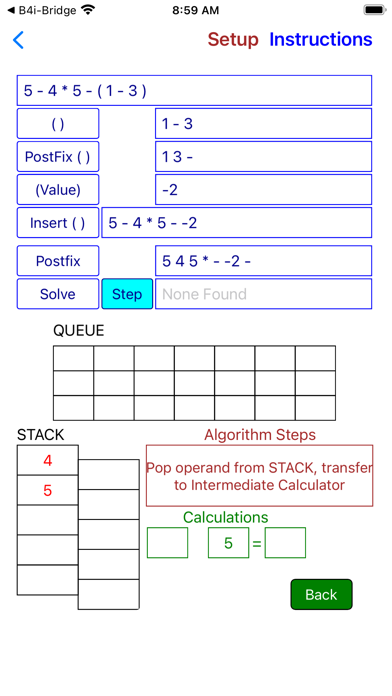
Computers, including smart phone calculators, desktops, etc. have built in functionality to properly interpret such expressions so we don't have to. But have you ever wondered what algorithms the CPU executes to get the right answer every time? This app demonstrates one such algorithm called the Shunt Yard, developed a few years back by Professor Edsger W. Dijkstra.
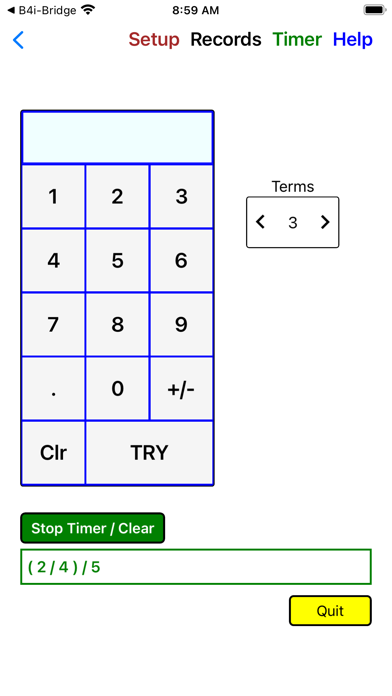
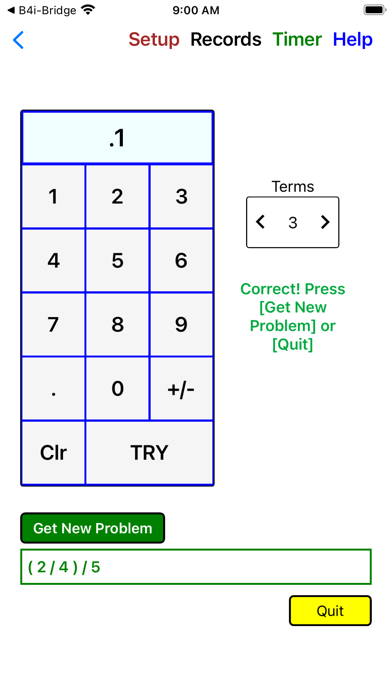
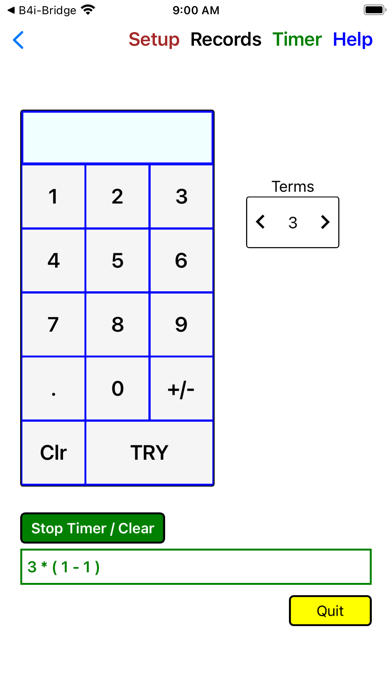
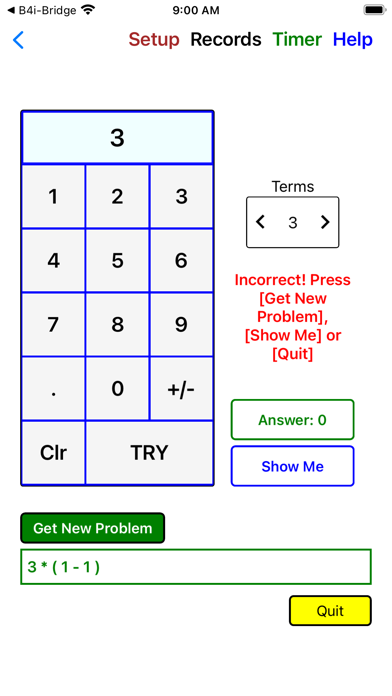
We’re going to take a closer look under the hood at Order of Operations algorithms. It will interest programmers and school students alike; for programmers, the use of queues and stacks will reinforce previous computer science learning; for students, it allows them to write an expression, then analyze it using Order of Operations rules, step by step. The Quiz mode generates random expressions of user selected lengths and magnitudes and checks the student's answer. Incorrect answers can be examined using the same step by step process.
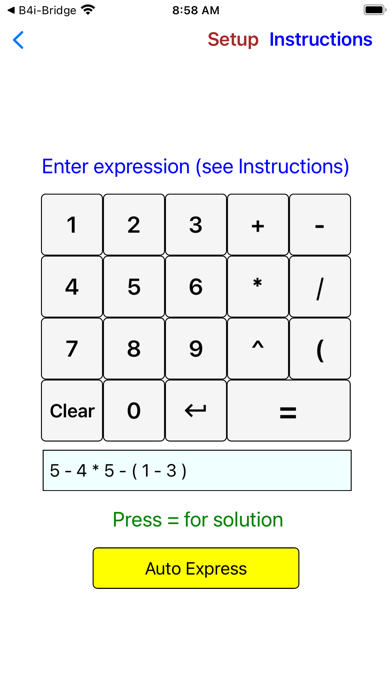
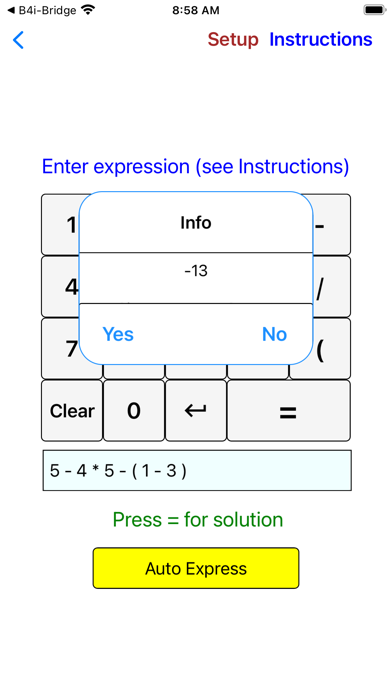
In the SOLVE mode, algebraic expressions are entered free hand using an internal keyboard which limits entries to the five common mathematical operators (+ - / * ^) as well as one level of parenthesis. There is a maximum term limit of ten variables, but no limit to their magnitude in this mode.
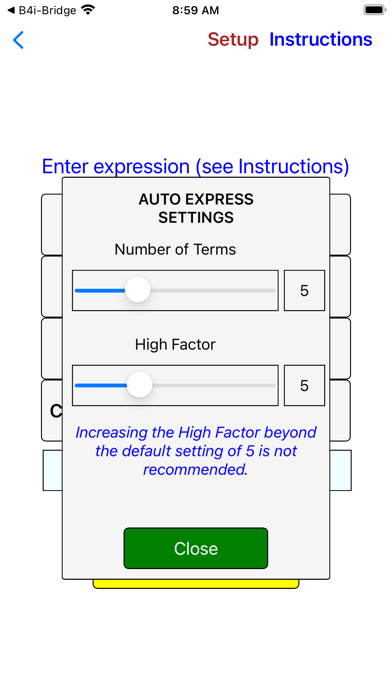
In the QUIZ mode, between two and ten variables can be selected, their maximum value and which operators that are eligible. The program then randomly generates an algebraic expression using these parameters.
Both modes make available an analysis page which is used to step through the solution. Stack/Queue dynamics are displayed.