

Kerotakis
Kerotakis is made and published by Christian Strobele. AppBrain is an independent app data site and isn't affiliated with Christian Strobele. The app name, icon, screenshots and description belong to Christian Strobele and are shown as published on the App Store.
AppBrain's verdict
- Last updated
- September 25, 2026
Rankings
App Store top chartsApp Store Rankings for Kerotakis
Competitors
Similar apps and more from Christian StrobeleAlternatives to Kerotakis




More from Christian Strobele

Releases
Updates seen on the App Store- Version
- 1.0
- Launched
- September 2026
No changelog data
User feedback
Ratings and reviews on the App StoreComments on Kerotakis for iOS
We don't have enough comments to show example comments. Please check back later.
Technology
Found in the app by AppBrain- Price
- Free
- App size
- 16.6 MB
- Content rating
- Everyone
Technologies used by Kerotakis
About the app and developer
About Kerotakis
Kerotakis is an education app developed by Christian Strobele.
What is the rating of Kerotakis?
Kerotakis has no ratings yet.
Is Kerotakis free?
Kerotakis is free. The app size is 16.62 MB. The latest version available is 1.0. The last update was on September 25, 2026.
What are the requirements for Kerotakis?
The app has a content rating of Everyone. The app has been available on the App Store since September 2026.
Developer information for Christian Strobele
Address:
Store listing
By Christian Strobele, from the App Store


Description by Christian Strobele Written by the developer, not by AppBrain. Click to read.
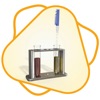
Drag reagents onto drawn glassware and a real aqueous-equilibrium solver answers. Nothing in it is a lookup table: every number comes out of a thermodynamic database at run time, which means the bench can do something a textbook cannot — show you a model working, and then show you the same model failing.
WHAT IT COMPUTES
• Dissolution and precipitation against actual solubility limits. Eight moles of salt in a litre of water leaves about 1.9 undissolved, because that is what the equilibrium says.
• Acids and bases from charge balance — strong, weak, polyprotic through every pKa, and buffers that resist acid where plain water crashes.
• Titration curves walked with a burette, to the equivalence point and past it.
• Gas boundaries you choose: vent to the room, seal the vessel, regulate the pressure, or sweep with nitrogen. Pressure, volume, energy and the mass balance all answer to the constraint.
• Heats of reaction that move the thermometer, so calcium chloride is a hot pack and potassium chloride a cold one.
• The activity series decided by Nernst over computed potentials — including the refusals, like copper shrugging off acid.
• Separations: filter a precipitate off, evaporate a brine to crystals, distil a mixture.
THREE LEVELS, ONE SIMULATION
A register dial re-tells any result at the depth you want. Level one is what you would see: it went cloudy, a white solid settled. Level two adds the measurements. Level three shows every species, activity and coefficient behind the answer — the same numbers, never a different simulation.
Every result carries where it came from, and the app says "unassessed" rather than implying safe when nobody has checked.
OFFLINE, ALWAYS
The solver, the thermodynamic databases and the whole lesson library are inside the app. It makes no network requests, has no account, and collects nothing whatsoever. It works with the network switched off.
Built on IPhreeqc from the U.S. Geological Survey. Kerotakis is free software; the source is at github.com/CrispStrobe/kerotakis.