

READING MAGIC 2
READING MAGIC 2 is made and published by PRESCHOOL UNIVERSITY. AppBrain is an independent app data site and isn't affiliated with PRESCHOOL UNIVERSITY. The app name, icon, screenshots and description belong to PRESCHOOL UNIVERSITY and are shown as published on the App Store.
AppBrain's verdict
Established- Rating on App Store
- 4.81
- 21 ratings
- Last updated
- July 10, 2026
It doesn't have enough ratings yet to judge what users think.
Rankings
App Store top chartsApp Store Rankings for READING MAGIC 2
Competitors
Similar apps and more from PRESCHOOL UNIVERSITYAlternatives to READING MAGIC 2


More from PRESCHOOL UNIVERSITY


Releases
Updates seen on the App Store- Version
- 3.6
- Launched
- April 2011
No changelog data
User feedback
Ratings and reviews on the App StoreComments on READING MAGIC 2 for iOS
We don't have enough comments to show example comments. Please check back later.
Technology
Found in the app by AppBrain- Price
- Free
- App size
- 257.8 MB
- Content rating
- Everyone
Technologies used by READING MAGIC 2
About the app and developer
About READING MAGIC 2
READING MAGIC 2 is an education app developed by PRESCHOOL UNIVERSITY.
User Ratings
READING MAGIC 2 is rated 4.81 out of 5 stars. The rating is based on 21 ratings.
App Information
READING MAGIC 2 is freely available from the App Store. The app size is 257.80 MB. The latest version available is 3.6. The last update was on July 10, 2026.
Technical Requirements
The app has a content rating of Everyone. The app has been available on the App Store since April 2011.
Developer information for PRESCHOOL UNIVERSITY
Address:
Frequently asked questions about READING MAGIC 2
Is READING MAGIC 2 free?
Yes. READING MAGIC 2 is free on the App Store.
Is READING MAGIC 2 still available?
Yes. READING MAGIC 2 is on the App Store, and the last update we saw was on July 10, 2026.
How large is READING MAGIC 2?
READING MAGIC 2 is 257.80 MB.
Is READING MAGIC 2 suitable for children?
App Store rates the content of READING MAGIC 2 as suitable for everyone.
How do people rate READING MAGIC 2?
READING MAGIC 2 scores 4.81 out of 5 stars, from 21 ratings on the App Store.
Who made READING MAGIC 2?
READING MAGIC 2 was developed by PRESCHOOL UNIVERSITY. It is listed in the education category on the App Store.
What are the best alternatives to READING MAGIC 2?
People looking at READING MAGIC 2 also look at these education apps: Blending Board, Bob Books Reading Magic Lite, Reading For All Learners 1-8, Bob Books Sight Words Lite, Word Wizard: Learn to Read.
Store listing
By PRESCHOOL UNIVERSITY, from the App Store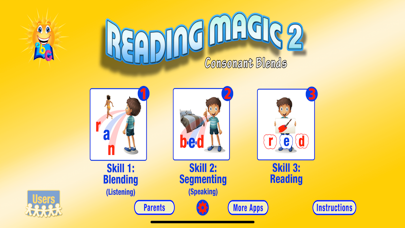


Description by PRESCHOOL UNIVERSITY Written by the developer, not by AppBrain. Click to read.
Transform your child into a confident reader with READING MAGIC 2! This app makes learning to read an exciting adventure with interactive activities focused on CCVC (Consonant-Consonant-Vowel-Consonant) and CVCC short-vowel blend words.
Meticulously designed to provide an advanced boost to your child’s phonemic awareness, this app combines three foundational pillars of literacy science into one powerful, interactive ecosystem: Blending (Listening), Segmenting (Speaking), and Decoding (Reading). Grounded firmly in Science of Reading principles and utilizing University of Florida Literacy Institute (UFLI) guidelines, READING MAGIC provides specific, precise training with extensive repetitions to help young brains bridge the gap between spoken sound units and complete words.
IDEAL FOR BOTH BEGINNING PRE-READERS AND STRUGGLING READERS
For Beginning Pre-Readers: A stress-free launchpad. By practicing words through pure sound sequences first, your child masters the internal mechanics of reading without cognitive overload. This keeps them from being frustrated by trying to learn separate, difficult skills at the same time.
For Struggling or Remedial Readers: If your child's reading is hesitant or choppy, or if they guess at words, this app provides the targeted intervention recommended by modern reading science to help young brains bridge the gap.
THREE CRITICAL SKILL-BUILDING PILLARS
While many phonics programs completely overlook the auditory mechanics of reading, our program systematically guides your child through the complete progression of decoding:
Skill 1: Blending (Listening): Interactive listening activities train your child’s neural processing ability to hear isolated sounds in words and join them together mentally. This builds the vital auditory runway required for future fluency.
Skill 2: Segmenting (Speaking): True spelling and reading independence require the ability to pull spoken words apart into their individual sound units. These exercises build explicit awareness of the acoustic structure of language.
Skill 3: Decoding (Reading): The ultimate bridge to literacy. Your child applies their mastery of blending and segmenting directly to text, smoothly moving from spoken sounds to visual words.
STRUCTURAL SPACING & INSTRUCTION (Science-Backed Layout)
Our app builds the actual findings of reading science directly into the user interface for maximum visual clarity:
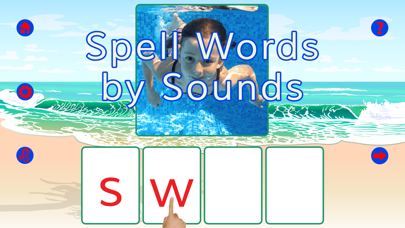
Anti-Crowding Design: Peer-reviewed research, including Marinus et al. (2016) and Wery & Diliberto (2017), demonstrates that generous letter spacing is critical for early decoding. By placing each letter on its own isolated card with distinct physical gaps, our layout eliminates visual crowding, allowing your child to isolate each sound unit cleanly.
True Comprehension: The app strictly discourages picture guessing, forcing children to rely purely on their decoding skills to foster true comprehension and build lasting confidence.
INDEPENDENT LEARNING & AESTHETIC SIMPLICITY
Distraction-Free: Our minimalist design eliminates overstimulating audio-visual clutter, excessive sound effects, and animations to keep your child entirely focused on the mechanics of reading.
Stress-Free Growth: Built-in natural feedback loops offer gentle corrections, nurturing self-discovery and independent learning at your child's own pace.
EXPERT RESEARCH BACKING
"Before a child can read fluently with their eyes, they must be able to blend fluently with their ears. Weakness in auditory blending is one of the strongest early predictors of later reading failure." — Dr. Joseph Torgesen, Florida State University.
"Teaching students to blend and segment benefited their reading much more than did a multiple-skills approach... and teaching phonemic awareness with letters created effect sizes almost twice as large as teaching children without letters." — The National Reading Panel (NRP) Meta-Analysis