

RTI Hindi is made and published by Dharmesh Kathiriya. AppBrain is an independent app data site and isn't affiliated with Dharmesh Kathiriya. The app name, icon, screenshots and description belong to Dharmesh Kathiriya and are shown as published on the App Store.
AppBrain's verdict
- Last updated
- July 2, 2020
Rankings
App Store top chartsApp Store Rankings for RTI Hindi
Competitors
Similar apps and more from Dharmesh KathiriyaAlternatives to RTI Hindi







More from Dharmesh Kathiriya






Releases
Updates seen on the App Store- Version
- 1.1
- Launched
- February 2019
No changelog data
User feedback
Ratings and reviews on the App StoreComments on RTI Hindi for iOS
We don't have enough comments to show example comments. Please check back later.
Technology
Found in the app by AppBrain- Price
- Free
- App size
- 20.3 MB
- Content rating
- Everyone
Technologies used by RTI Hindi
About the app and developer
About RTI Hindi
RTI Hindi is a books app developed by Dharmesh Kathiriya.
User Ratings
The app has no ratings yet.
App Information
RTI Hindi is freely available from the App Store. The app size is 20.30 MB. The latest version available is 1.1. The last update was on July 2, 2020.
Technical Requirements
The app has a content rating of Everyone. The app has been available on the App Store since February 2019.
Developer information for Dharmesh Kathiriya
Address:
Frequently asked questions about RTI Hindi
Is RTI Hindi free?
Yes. RTI Hindi is free on the App Store.
Is RTI Hindi still available?
Yes. RTI Hindi is on the App Store, and the last update we saw was on July 2, 2020.
How large is RTI Hindi?
RTI Hindi is 20.30 MB.
Is RTI Hindi suitable for children?
App Store rates the content of RTI Hindi as suitable for everyone.
Who made RTI Hindi?
RTI Hindi was developed by Dharmesh Kathiriya. It is listed in the books category on the App Store.
What are the best alternatives to RTI Hindi?
People looking at RTI Hindi also look at these books apps: Statio - Status App, Chanakya Neeti Quotes Status, Allahabad Uttra. Legal Reports, Majedar Kahaniya Kid's Stories, Chanakya Niti Hindi & Quotes.
Store listing
By Dharmesh Kathiriya, from the App Store
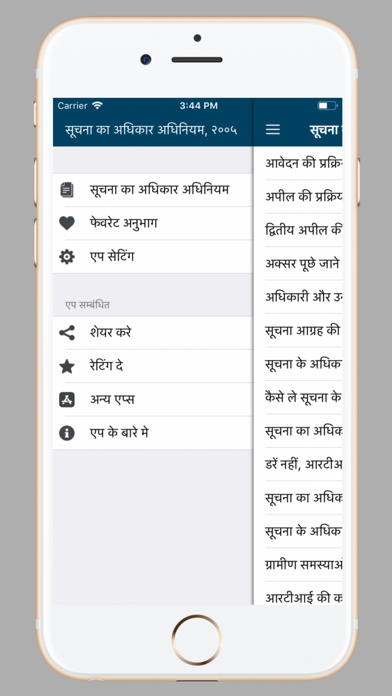
Description by Dharmesh Kathiriya Written by the developer, not by AppBrain. Click to read.
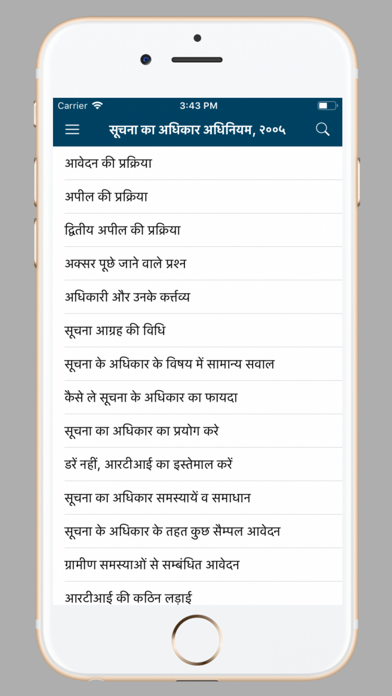
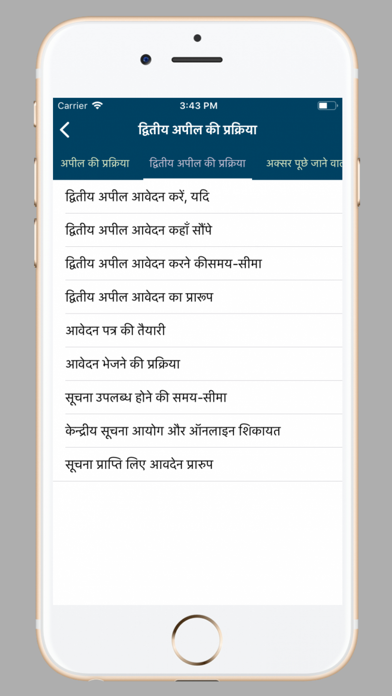
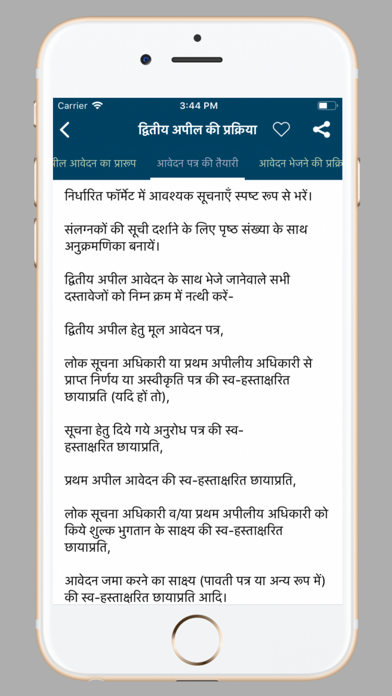
लोकतंत्र में देश की जनता अपनी चुनी हुए व्यक्ति को शासन करने का अवसर प्रदान करती है और यह अपेक्षा करती है कि सरकार पूरी ईमानदारी और कर्तव्यनिष्ठा के साथ अपने दायित्वों का पालन करेगी। लेकिन कालान्तर में अधिकांश राष्ट्रों ने अपने दायित्वों का गला घोटते हुए पारदर्शिता और ईमानदारी की बोटियाँ नोंचने में कोई कसर नहीं छोड़ी और भ्रष्टाचार के बड़े-बड़े कीर्तिमान कायम करने को एक भी मौक अपने हाथ से गवाना नहीं भूले। भ्रष्टाचार के इन कीर्तिमानों को स्थापित करने के लिए हर वो कार्य किया जो जनविरोधी और अलोकतांत्रिक हैं। सरकारे यह भूल जाती है कि जनता ने उन्हें चुना है और जनता ही देश की असली मालिक है एवं सरकार उनकी चुने हुई नौकर। इसलिए मालिक होने के नाते जनता को यह जानने का पूरा अधिकार है, कि जो सरकार उनकी सेवा है, वह क्या कर रही है ?
प्रत्येक नागरिक सरकार को किसी ने किसी माध्यम से टेक्स देती है। यहां तक एक सुई से लेकर एक माचिस तक का टैक्स अदा करती है। सड़क पर भीख मांगने वाला भिखारी भी जब बाज़ार से कोई सामान खरीदता है, तो बिक्री कर, उत्पाद कर इत्यादि टैक्स अदा करता है।
इसी प्रकार देश का प्रत्येक नागरिक टैक्स अदा करता है और यही टैक्स देश के विकास और व्यवस्था की आधारशिला को निरन्तर स्थिर रखता है। इसलिए जनता को यह जानने का पूरा हक है कि उसके द्वारा दिया गया, पैसा कब, कहाँ, और किस प्रकार खर्च किया जा रहा है ? इसके लिए यह जरूरी है कि सूचना को जनता के समक्ष रखने एवं जनता को प्राप्त करने का अधिकार प्रदान किया जाए, जो एक कानून द्वारा ही सम्भव है।
Right to Information (RTI) is an Act of the Parliament of India to provide for setting out the practical regime of right to information for citizens and replaces the erstwhile Freedom of information Act, 2002. Under the provisions of the Act, any citizen of India may request information from a "public authority" (a body of Government or "instrumentality of State") which is required to reply expeditiously or within thirty days. The Act also requires every public authority to computerize their records for wide dissemination and to proactively certain categories of information so that the citizens need minimum recourse to request for information formally.
This law was passed by Parliament on 15 June 2005 and came fully into force on 12 October 2005. The first application was given to a Pune police station. Information disclosure in India was restricted by the Official Secrets Act 1923 and various other special laws, which the new RTI Act relaxes. It codifies a fundamental right of citizens.
The Right to information RTI in India is governed by two major bodies:
Central Information Commission (CIC) – Chief Information commissioner who heads all the central departments and ministries- with their own public Information officers (PIO)s. CICs are directly under the President of India.
State Information Commissions-State Public Information Officers or SPIOs – Heading over all the state department and ministries the SPIO office is directly under the State Governor.
State and Central Information Commissions are independent bodies and Central Information Commission has no jurisdiction over the State Information Commission.