

SpiderSpotter | SPOTTERON
SpiderSpotter | SPOTTERON is made and published by SPOTTERON Gmbh. AppBrain is an independent app data site and isn't affiliated with SPOTTERON Gmbh. The app name, icon, screenshots and description belong to SPOTTERON Gmbh and are shown as published on the App Store.
AppBrain's verdict
- Last updated
- December 21, 2022
Rankings
App Store top chartsApp Store Rankings for SpiderSpotter | SPOTTERON
Competitors
Similar apps and more from SPOTTERON Gmbh





Releases
Updates seen on the App Store- Version
- 3.5.0
- Launched
- August 2019
No changelog data
User feedback
Ratings and reviews on the App StoreComments on SpiderSpotter | SPOTTERON for iOS
We don't have enough comments to show example comments. Please check back later.
Technology
Found in the app by AppBrain- Price
- Free
- App size
- 41.7 MB
- Content rating
- Everyone
Technologies used by SpiderSpotter | SPOTTERON
About the app and developer
About SpiderSpotter | SPOTTERON
SpiderSpotter | SPOTTERON is an education app developed by SPOTTERON Gmbh.
What is the rating of SpiderSpotter | SPOTTERON?
SpiderSpotter | SPOTTERON has no ratings yet.
Is SpiderSpotter | SPOTTERON free?
SpiderSpotter | SPOTTERON is free. The app size is 41.69 MB. The latest version available is 3.5.0. The last update was on December 21, 2022.
What are the requirements for SpiderSpotter | SPOTTERON?
The app has a content rating of Everyone. The app has been available on the App Store since August 2019.
Developer information for SPOTTERON Gmbh
Address:
Store listing
By SPOTTERON Gmbh, from the App Store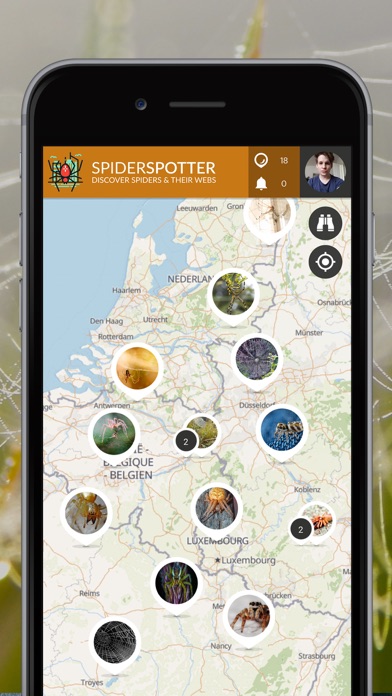
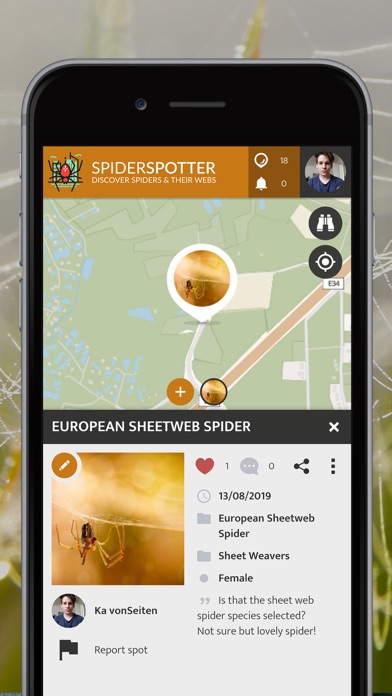
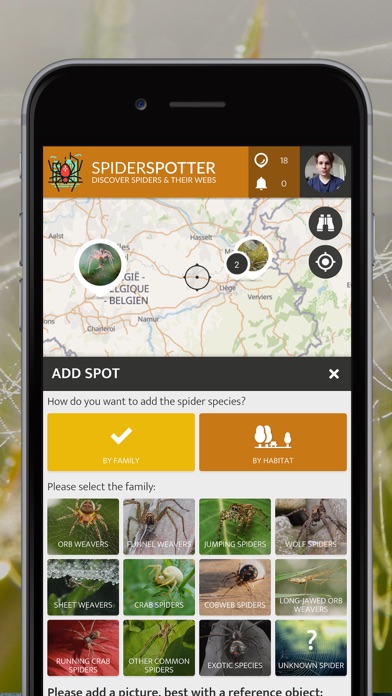
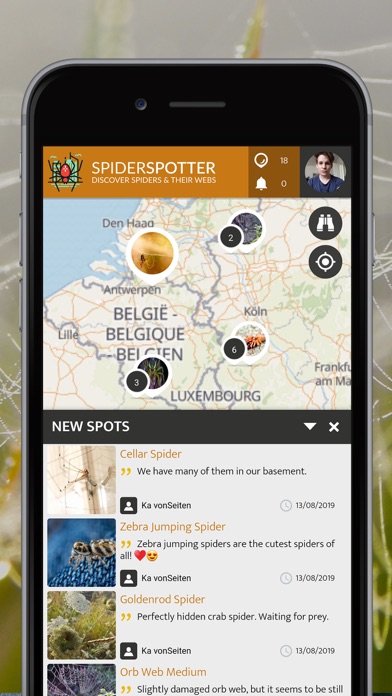
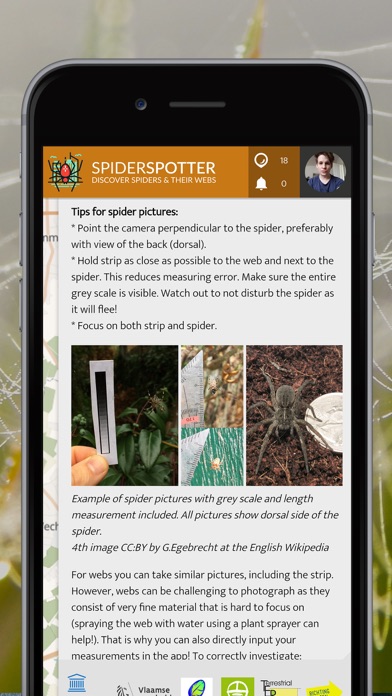

Description by SPOTTERON Gmbh Written by the developer, not by AppBrain. Click to read.
We focus on two important spider traits: color and webs.
Spider color: Much like a white car heats up less in the sun compared to a black car, so does a lighter spider heat up less compared to a dark spider. Therefore we expect city spiders to evolve a more lighter color as this protects them from overheating in an already hot city.
Spider webs: As the main tool for prey capture, webs are crucial for spider survival. Due to a lower supply of prey in cities, we expect to see webs with a smaller mesh size that are more efficient in capturing prey.
Why study adaptations to city living in spiders?
Not only do we get crucial information about how animals can adapt to climate change, studying spiders can also be very useful for us humans! We can use spider color as a natural thermometer and thus better determine how quickly our environment heats up. And who knows, by examining in detail how a spider uses color to stay cool, we might even find new ways of staying cool in the city ourselves.
Read more about SpiderSpotter project on www.spiderspotter.com!
The project runs on the SPOTTERON Citizen Science platform.