

Tai Chi 13 Postures
Tai Chi 13 Postures is made and published by YMAA Publication Center, Inc. AppBrain is an independent app data site and isn't affiliated with YMAA Publication Center, Inc. The app name, icon, screenshots and description belong to YMAA Publication Center, Inc. and are shown as published on the App Store.
AppBrain's verdict
EstablishedTop 10- Best rank
- #9
- Top Paid, Portugal
- Rating on App Store
- 5.00
- 3 ratings
- Last updated
- January 13, 2023
It doesn't have enough ratings yet to judge what users think. Its best ranking is #9 in Top Paid, Health & Fitness in Portugal.
Rankings
App Store top charts- Highest rank
- #9
- Chart
- Top Paid
- Health & Fitness
- Country
- Portugal
App Store Rankings for Tai Chi 13 Postures
Top rankings
| Rank | Country | Category | List |
|---|---|---|---|
| 9 | Portugal | Health & Fitness | Top Paid |
Ranking history in Portugal
Competitors
Similar apps and more from YMAA Publication Center, Inc.Alternatives to Tai Chi 13 Postures


More from YMAA Publication Center, Inc.


Also available on Google Play

Releases
Updates seen on the App Store- Version
- 1.0.3
- Launched
- May 2015
No changelog data
User feedback
Ratings and reviews on the App StoreComments on Tai Chi 13 Postures for iOS
We don't have enough comments to show example comments. Please check back later.
Technology
Found in the app by AppBrain- Price
- $5.99
- App size
- 13.7 MB
- Content rating
- Everyone
Technologies used by Tai Chi 13 Postures
About the app and developer
About Tai Chi 13 Postures
Tai Chi 13 Postures is a health & fitness app developed by YMAA Publication Center, Inc.
What is the rating of Tai Chi 13 Postures?
Tai Chi 13 Postures is rated 5.00 out of 5 stars, based on 3 ratings.
Is Tai Chi 13 Postures free?
Tai Chi 13 Postures costs $5.99. The app size is 13.70 MB. The latest version available is 1.0.3. The last update was on January 13, 2023.
What are the requirements for Tai Chi 13 Postures?
The app has a content rating of Everyone. The app has been available on the App Store since May 2015.
Developer information for YMAA Publication Center, Inc.
Address:
Frequently asked questions about Tai Chi 13 Postures
Is Tai Chi 13 Postures free?
No. Tai Chi 13 Postures costs $5.99 on the App Store.
Is Tai Chi 13 Postures still available?
Yes. Tai Chi 13 Postures is on the App Store, and the last update we saw was on January 13, 2023.
How large is Tai Chi 13 Postures?
Tai Chi 13 Postures is 13.70 MB.
Is Tai Chi 13 Postures suitable for children?
App Store rates the content of Tai Chi 13 Postures as suitable for everyone.
How do people rate Tai Chi 13 Postures?
Tai Chi 13 Postures scores 5.00 out of 5 stars, from 3 ratings on the App Store.
Who made Tai Chi 13 Postures?
Tai Chi 13 Postures was developed by YMAA Publication Center, Inc. It is listed in the health & fitness category on the App Store.
What are the best alternatives to Tai Chi 13 Postures?
People looking at Tai Chi 13 Postures also look at these health & fitness apps: Shaolin Meditation, AI Taekwondo Coach, Boabom: Mindful Movement, Yoga - Body and Mindfulness, Yoga Nidra.
Store listing
By YMAA Publication Center, Inc., from the App Store

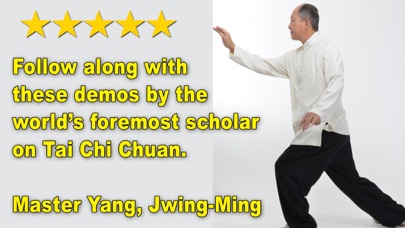

Description by YMAA Publication Center, Inc. Written by the developer, not by AppBrain. Click to read.
Tai Chi Chuan is a slow and relaxed moving meditation. Through practicing Tai Chi you are able to calm down the mind, locate your spiritual center, and consequently find your entire being. From the relaxed moving exercise, you can bring your physical body into an ultimate level of relaxation and natural ease, resulting in smooth Qi (inner energy) and blood circulation. This is a key to maintaining health and recovering from sickness.
Today, most people practice Tai Chi slowly to develop their balance, strength, and vitality, and the martial applications of the art are often ignored. Originally, Tai Chi Chuan was an ancient internal Chinese martial art, 'Grand Ultimate Fist'; a highly effective form of combat specializing in short and middle-range fighting.
In China, t'ai chi ch'uan is categorized under the Wudang grouping of Chinese martial arts, which are applied with internal power (jing), using Qi (energy). The history of the basic postures in the Yang form can be traced back through Wudang mountain to Shaolin Temple, developed from a series of movements originating from "Chang Quan" (Long Fist, a reference to the winding Long River, another name for the Yangtze). Around 800 AD, a philosopher named Xu, Xuan-Ping is credited for developing a long Kung Fu of 37 forms, which included these common Tai Chi movements:
• Play the Guitar
• Single Whip
• Step Up to Seven Stars
• Jade Lady Works the Shuttles
• High Pat on Horse
• Phoenix Flaps Its Wings
"Taiji Chang Quan" existed in many variations, and eventually evolved into Taijiquan. Other forms of the same era such as "Heavenly-Inborn Style", "Nine Small Heavens", and "Acquired Kung Fu" also show similarities to what later became Taijiquan. The principles of softness, sticking, adhering, and using the opponent's own momentum against himself were established in these precursory martial styles. Bodhidharma's teaching at the Buddhist Shaolin Temple around 550AD, which detailed the theory of using the mind to lead the Qi to energize the physical body, is widely considered the origin of all Internal Martial Arts, including Tai Chi.
Dr. Yang's tai chi can be traced back to the Yang family through Grandmaster Kao, Tao (高濤) and his teacher Yue, Huanzhi (樂奐之), an indoor disciple of Yang, Chengfu (楊澄甫).
Thank you for downloading our app! We are striving to make the best possible video apps available.
Sincerely,
The team at YMAA Publication Center, Inc.
(Yang’s Martial Arts Association)
CONTACT: apps@ymaa.com
VISIT: www.YMAA.com
WATCH: www.YouTube.com/ymaa