
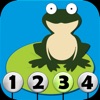
Teaching Number Lines
Teaching Number Lines is made and published by Aleesha Kondys. AppBrain is an independent app data site and isn't affiliated with Aleesha Kondys. The app name, icon, screenshots and description belong to Aleesha Kondys and are shown as published on the App Store.
AppBrain's verdict
Established- Rating on App Store
- 3.00
- 2 ratings
- Last updated
- November 14, 2022
It doesn't have enough ratings yet to judge what users think.
Rankings
App Store top chartsApp Store Rankings for Teaching Number Lines
Competitors
Similar apps and more from Aleesha KondysAlternatives to Teaching Number Lines


More from Aleesha Kondys




Releases
Updates seen on the App Store- Version
- 2.1
- Launched
- January 2012
No changelog data
User feedback
Ratings and reviews on the App StoreComments on Teaching Number Lines for iOS
We don't have enough comments to show example comments. Please check back later.
Technology
Found in the app by AppBrain- Price
- Free
- App size
- 17.1 MB
- Content rating
- Everyone
Technologies used by Teaching Number Lines
About the app and developer
About Teaching Number Lines
Teaching Number Lines is an education app developed by Aleesha Kondys.
What is the rating of Teaching Number Lines?
Teaching Number Lines is rated 3.00 out of 5 stars, based on 2 ratings.
Is Teaching Number Lines free?
Teaching Number Lines is free. The app size is 17.06 MB. The latest version available is 2.1. The last update was on November 14, 2022.
What are the requirements for Teaching Number Lines?
The app has a content rating of Everyone. The app has been available on the App Store since January 2012.
Developer information for Aleesha Kondys
Address:
Frequently asked questions about Teaching Number Lines
Is Teaching Number Lines free?
Yes. Teaching Number Lines is free on the App Store.
Is Teaching Number Lines still available?
Yes. Teaching Number Lines is on the App Store, and the last update we saw was on November 14, 2022.
How large is Teaching Number Lines?
Teaching Number Lines is 17.06 MB.
Is Teaching Number Lines suitable for children?
App Store rates the content of Teaching Number Lines as suitable for everyone.
How do people rate Teaching Number Lines?
Teaching Number Lines scores 3.00 out of 5 stars, from 2 ratings on the App Store.
Who made Teaching Number Lines?
Teaching Number Lines was developed by Aleesha Kondys. It is listed in the education category on the App Store.
What are the best alternatives to Teaching Number Lines?
People looking at Teaching Number Lines also look at these education apps: GeoBoard coordinates cartesian, TeachMe: Kindergarten, King of Math Jr, Write Numbers Learn Math, Math Number Bubble Rocket Game.
Store listing
By Aleesha Kondys, from the App Store


Description by Aleesha Kondys Written by the developer, not by AppBrain. Click to read.
Little Monkey Apps Number Lines aims to students to visualise numbers for rote counting and ordering and to see the physical position of a number linking patterns and relationships. Unlike counters, which model counting, a number line also models measurement, which is why the number line begins with zero as you would see on a ruler. Students are also exposed to different vocabulary for addition and subtraction such as step forward or jump back to physically suggest the movement of the frog along the number line.
When initially introducing number lines, it is important to physically act out a number line. In conjunction with Little Monkey Apps Number Lines, you might like to make a number line on the floor on masking tape; write numbers on cards and hang them over a piece of string in order; draw a number line on the ground and step out the numbers or you could use boxes or placemats and act out soft toys leaping or stepping from one number to another.
=Teaching Module=
Why should you use a number line? Why not count blocks or counters? Yes! You should be doing those things, but Number lines are another valid alternative to teaching counting, sequence, addition and subtraction. It is important to introduce number lines in conjunction with other methods. Number lines are everywhere from rulers (including half centimetres and decimal fractions) to thermometers, clocks and when you think about it board games.
Little Monkey Apps Number Lines can be used for a variety of purposes including simple counting, to make jumps or leaps, to model addition and subtraction, for a group of students to demonstrate their thinking visually, to practice skip counting and to demonstrate simple multiples.
=Sequencing=
Little Monkey Apps Number Lines encourages learning about sequence and order. Often young students are able to recite numbers before they are able to physically count each object one-to-one.
Sequencing asks students to place missing frogs on the line standing in order! Early counters will start counting from 1 whilst more sophisticated counters others will look the next number or the number before.
=Addition and subtraction=
Little Monkey Apps Number Lines can be used to demonstrate another way of completing addition and subtraction. Counters can be used for this; however, a number line begins an early understanding of measurement (think ruler) Later on number lines will assist with fractions, decimals, and negative numbers, reading thermometers, clocks, rulers (with fractional centimetres and millimetres)
=Skip counting=
Little Monkey Apps Number lines encourages students to visualise skip counting patterns. In the Skip Counting Practice section, students can rehearse moving the frog by set steps with the visual aid of the blue markers. They can draw in the leaps or Once again children learn skip counting, initially by rote, then by noticing patterns or repeated addition (3+3+3+3+3). Some students see the position of the frog rather than the skipping over the numbers. It is important to focus on the skipped intervals as consistent as this is essential for measurement. Students will take time to become proficient at this skill.
Once this is mastered, Skip counting Test can be attempted. This section asks students to make the frog leap by 2s, 3s, 4s, starting at various positions from 0 to 4 on the number line. Note that this section is not about rote knowledge of facts. A student who can count by 2s or 3s, will need to understand how to skip count rather than memorising or rote knowledge of a particular pattern.