

Touch Tonnetz
Touch Tonnetz is made and published by Christopher Michaelis. AppBrain is an independent app data site and isn't affiliated with Christopher Michaelis. The app name, icon, screenshots and description belong to Christopher Michaelis and are shown as published on the App Store.
AppBrain's verdict
Established- Rating on App Store
- 3.50
- 4 ratings
- Last updated
- May 27, 2026
It doesn't have enough ratings yet to judge what users think.
Rankings
App Store top chartsApp Store Rankings for Touch Tonnetz
Competitors
Similar apps and more from Christopher MichaelisAlternatives to Touch Tonnetz


More from Christopher Michaelis

Releases
Updates seen on the App Store- Version
- 4.2
- Launched
- December 2016
No changelog data
User feedback
Ratings and reviews on the App StoreComments on Touch Tonnetz for iOS
We don't have enough comments to show example comments. Please check back later.
Technology
Found in the app by AppBrain- Price
- Free
- App size
- 86.8 MB
- Content rating
- Everyone
Technologies used by Touch Tonnetz
About the app and developer
About Touch Tonnetz
Touch Tonnetz is a music app developed by Christopher Michaelis.
User Ratings
Touch Tonnetz is rated 3.50 out of 5 stars. The rating is based on 4 ratings.
App Information
Touch Tonnetz is freely available from the App Store. The app size is 86.82 MB. The latest version available is 4.2. The last update was on May 27, 2026.
Technical Requirements
The app has a content rating of Everyone. The app has been available on the App Store since December 2016.
Developer information for Christopher Michaelis
Address:
Frequently asked questions about Touch Tonnetz
Is Touch Tonnetz free?
Yes. Touch Tonnetz is free on the App Store.
Is Touch Tonnetz still available?
Yes. Touch Tonnetz is on the App Store, and the last update we saw was on May 27, 2026.
How large is Touch Tonnetz?
Touch Tonnetz is 86.82 MB.
Is Touch Tonnetz suitable for children?
App Store rates the content of Touch Tonnetz as suitable for everyone.
How do people rate Touch Tonnetz?
Touch Tonnetz scores 3.50 out of 5 stars, from 4 ratings on the App Store.
Who made Touch Tonnetz?
Touch Tonnetz was developed by Christopher Michaelis. It is listed in the music category on the App Store.
What are the best alternatives to Touch Tonnetz?
People looking at Touch Tonnetz also look at these music apps: Toz - Geometric Music, ChronoChord, Tenney – JI Tuner & Lattice, Cymasphere, Harmony & Counterpoint.
Store listing
By Christopher Michaelis, from the App Store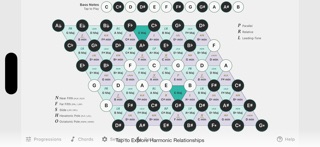




Description by Christopher Michaelis Written by the developer, not by AppBrain. Click to read.
Key Features:
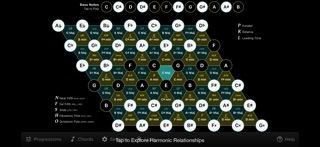
Interactive Tonnetz Visualization — Tap any chord or note to hear it and see its Neo-Riemannian transformations highlighted on the lattice
Harmonic Analysis — Roman numeral overlays for any tonic, updated in real time
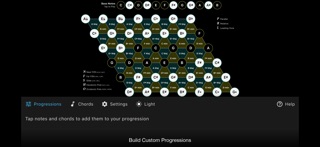
Progression Builder — Create, save, and play back melodic progressions
Custom Chords — Build and save your own chords for experimentation
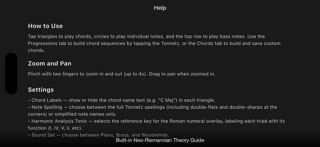
Three Instrument Sets — Piano, Brass, and Woodwinds, all high-quality samples
Six Color Schemes — Three dark, three light
Pinch to Zoom — Explore the lattice in detail at up to 4× magnification
7-Day Free Trial — Full access, no restrictions, no nags
Perfect For:
Composers looking for harmonic paths outside conventional progressions
Music theorists studying Neo-Riemannian transformations
Musicians experimenting with chord voice-leading
Students exploring music theory hands-on
What is Neo-Riemannian Theory?
Neo-Riemannian theory is a branch of music theory that studies relationships between major and minor triads using transformational geometry. Rather than treating chords as functions within a key (tonic, dominant, etc.), it focuses on the small voice-leading moves — Parallel, Leading-tone exchange, and Relative — that connect one triad to the next. The result is a rich map of chromatic harmony that complements traditional tonal analysis.
Why Touch Tonnetz?
The Tonnetz lattice makes these relationships spatial: related chords are neighbors, and transformations are visible paths. Touch Tonnetz lets you see the lattice, hear it, and build with it — turning an abstract theoretical framework into something you can explore by ear and by hand.