

Mozart 2 Pro
Mozart 2 Pro is made and published by RoGame Software. AppBrain is an independent app data site and isn't affiliated with RoGame Software. The app name, icon, screenshots and description belong to RoGame Software and are shown as published on the App Store.
AppBrain's verdict
Established- Rating on App Store
- 5.00
- 2 ratings
- Last updated
- March 13, 2023
It doesn't have enough ratings yet to judge what users think.
Rankings
App Store top chartsApp Store Rankings for Mozart 2 Pro
Competitors
Similar apps and more from RoGame SoftwareAlternatives to Mozart 2 Pro








More from RoGame Software








Releases
Updates seen on the App Store- Version
- 1.1.6
- Launched
- November 2015
No changelog data
User feedback
Ratings and reviews on the App StoreComments on Mozart 2 Pro for iOS
We don't have enough comments to show example comments. Please check back later.
Technology
Found in the app by AppBrain- Price
- $4.99
- App size
- 32.6 MB
- Content rating
- Everyone
Technologies used by Mozart 2 Pro
About the app and developer
About Mozart 2 Pro
Mozart 2 Pro is an education app developed by RoGame Software.
User Ratings
Mozart 2 Pro is rated 5.00 out of 5 stars. The rating is based on 2 ratings.
App Information
Mozart 2 Pro costs $4.99. The app size is 32.63 MB. The latest version available is 1.1.6. The last update was on March 13, 2023.
Technical Requirements
The app has a content rating of Everyone. The app has been available on the App Store since November 2015.
Developer information for RoGame Software
Address:
Store listing
By RoGame Software, from the App Store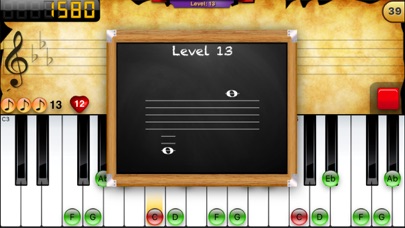
Description by RoGame Software Written by the developer, not by AppBrain. Click to read.
Learning how to read music is not easy. Specifically at the beginning it requires a lot of memorization, one of the most tedious aspects of learning. Not only do we have to know the location of a note on our instrument, but we have to be able to find it instantly - without thinking. That takes a lot of training.
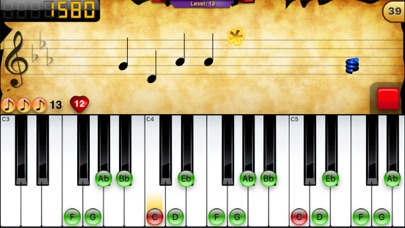
Getting involved on multiple levels is a proven approach, because additional involvement with the subject matter outside of the perceived practice session really enhances the learning process. With the Mozart game we can allow the use of some of our downtime to improve our skills. We don't need an instrument to do so, because one is built right into the software. Then, once the game starts we use this virtual instrument to identify each note as it flies across the staff system. The beauty of it is that you can play the game anywhere. Like when commuting on the subway, waiting at the dentist's, in line at the super market, you name it.
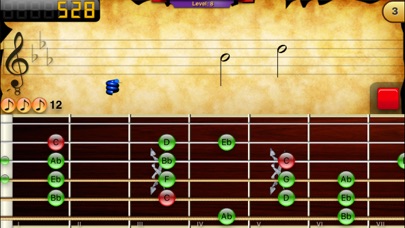
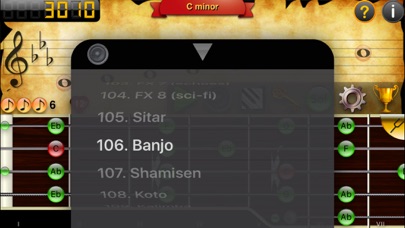
Once the game begins notes start moving from the right side of the screen to the left. These notes have to be identified in the order of their appearance with the current input instrument (i.e. piano). Once a note gets too close to the clef on the left side of the screen it disappears in a cloud of vapor and the player loses one life. For each note named in time the player gets one point or more depending on level. The further the game progresses the more notes will appear in this steady stream and their range will widen. To liven things up a little there are all sorts of "special" characters. Some give you bonus points and others move suddenly or explode even. Once a player has depleted all their lives the game is over and they might receive a high score. After a couple of weeks or so playing the game to conclusion once will take 5 to 10 minutes and that is time well spent.
The secret to the game's approach is that it isolates one specific aspect of reading music, namely that of identifying a note on the instrument. Training that ability to a near instinctual level is achieved by increasing speed and difficulty during the game. Games are really good at teaching us skills like super fast identification of objects for example. It is a fairly abstract thing to learn and that is why a game's reward system works well to incentivise continued practice. We are not entirely fooled of course and there is a qualitative difference between educational games and those we play for fun, but nevertheless.
Instruments:
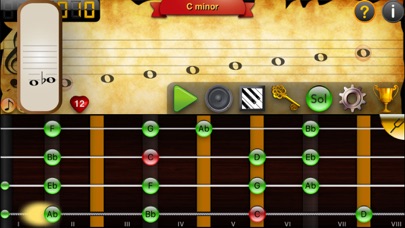
Banjo, Bass, Cello, Double Bass, Guitar, Mandolin, Piano, Viola, Violin
Features
• Intuitive interface
• Immersive game play
• All major and minor keys
• All common clefs
• Supports movable and fixed Do
• Adjustable tuning for all string instruments
• Support for left-handed players
• Missed note highlighting
• Training mode for range practice
• Half-speed mode
Designed for the beginning musician as well as the student or professional, Mozart is an excellent tool towards better reading in 12 minor and major keys, practicing Solfege, unfamiliar keys, clefs or just to have fun while learning.